.png)
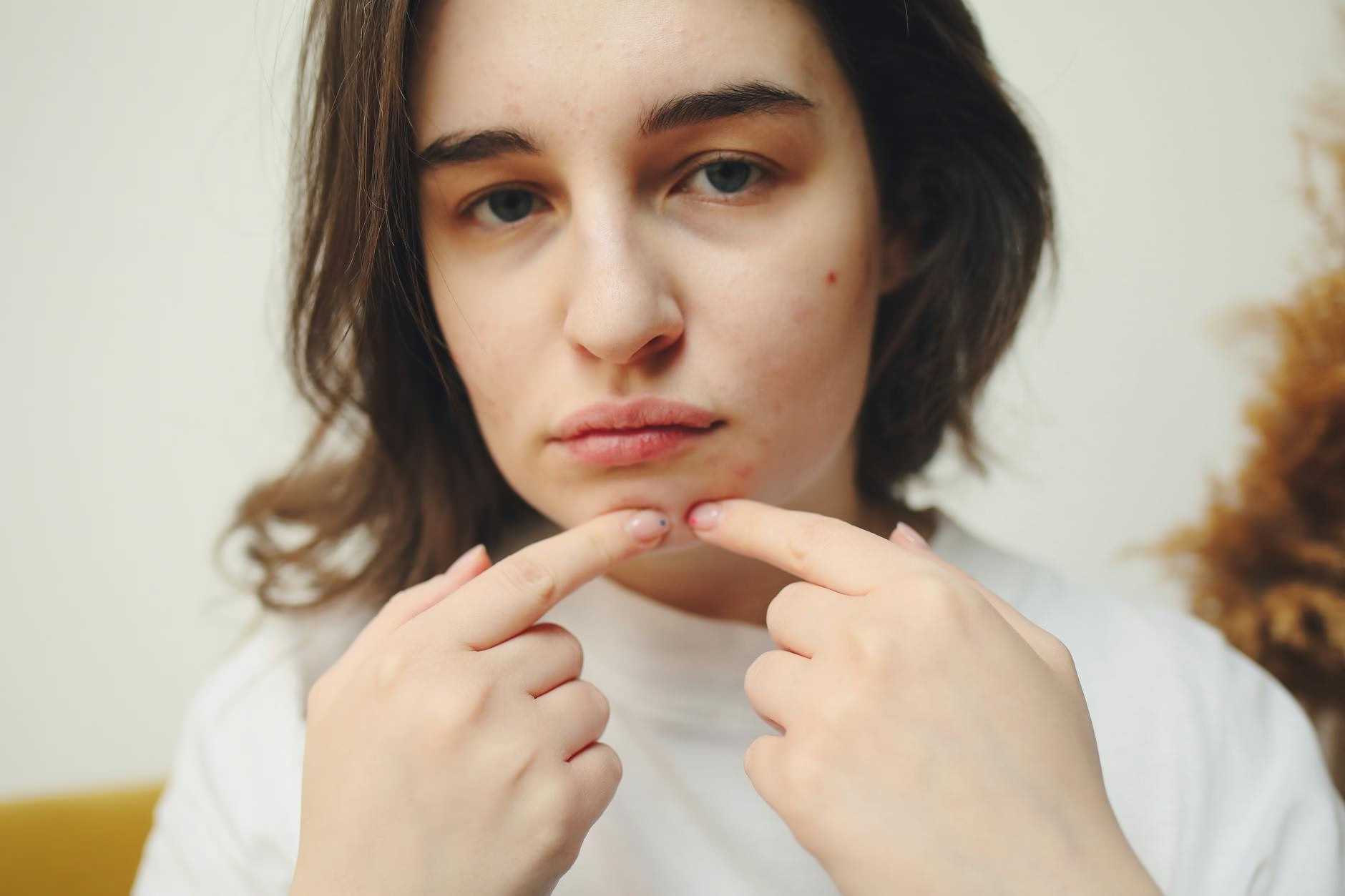
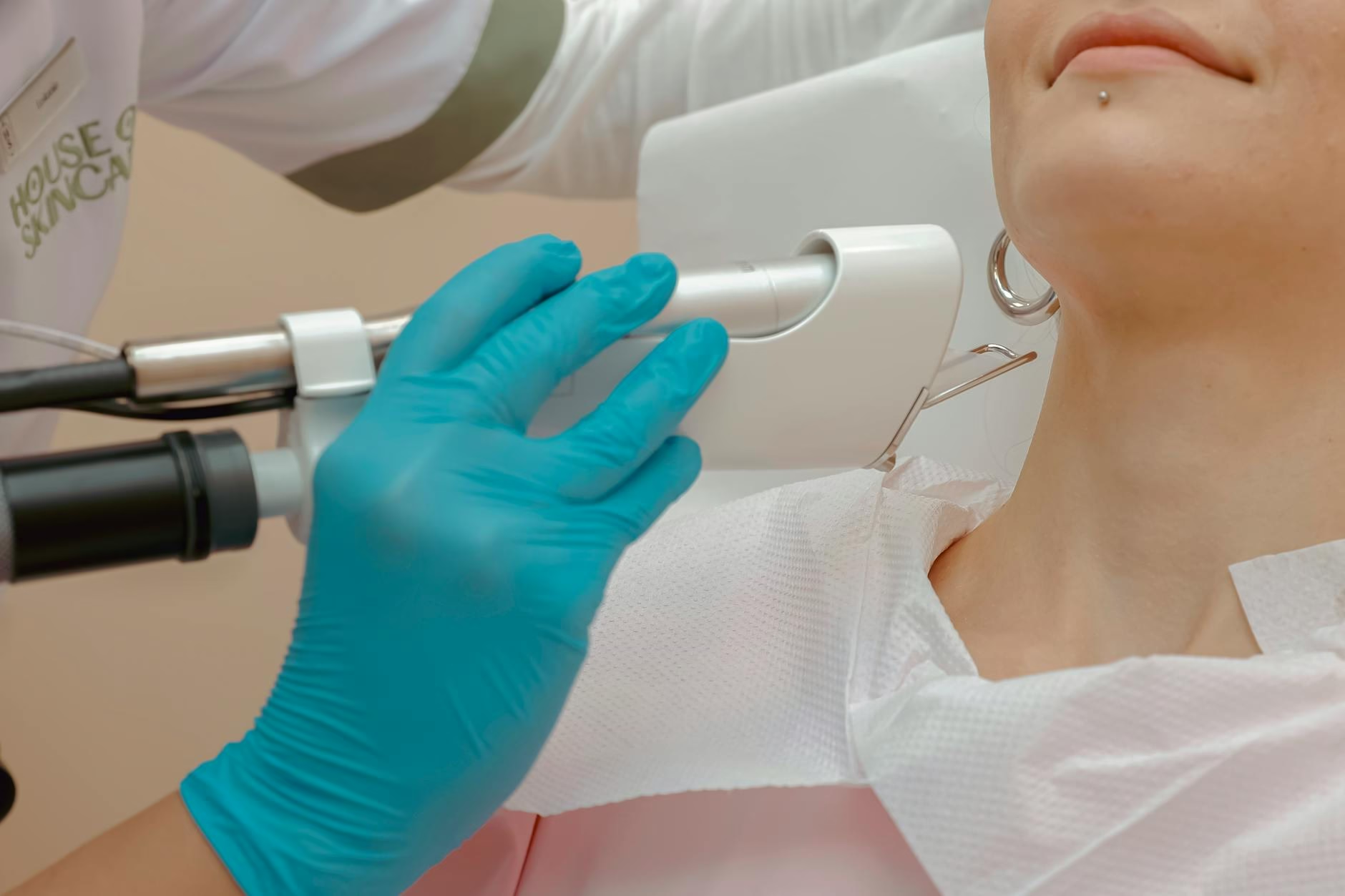
You’ve been staring at those dark pimple spots in the mirror long enough. If you’ve been researching PRP treatment for acne scars — wondering whether it actually works, how much it costs, and whether it’s worth it for Filipino skin — this is the guide you’ve been looking for. No fluff. Just clear answers, straight from a clinic that performs this procedure every single week.
Platelet rich plasma for pimple spots isn’t new science. But the way it’s being applied in 2025 — combined with microneedling, calibrated to Filipino skin tones, and personalized per scar type — has made it one of the most effective tools available for acne scar correction. Talaga.
By the end of this article, you’ll know exactly how PRP works on acne scars, what a full treatment session looks like, what results are realistic at what timeline, and how to take the next step at Melia Aesthetics in Pasig City.
Ready to book a free consultation? See our full derma aesthetics menu or read on — we’ll walk you through everything.
Why Pimple Spots Are So Hard to Get Rid Of
Alam mo ba — most people who deal with acne scars have already spent thousands on products that promised miracles and delivered nothing. Whitening serums. Spot correctors. Vitamin C. Retinol. And yet, the marks remain.
That’s not a failure of effort. It’s a failure of mechanism. Topical skincare works on the surface. Acne scars live beneath the skin — in the dermis, where collagen has been damaged or destroyed by inflammation. No amount of niacinamide reaches that layer. None.
According to a 2017 review published in the Journal of Clinical and Aesthetic Dermatology, approximately 95% of people who experience acne will develop some form of scarring. That stat alone should tell you this is not a minor issue — it’s one of the most common skin complaints worldwide, and among the hardest to treat with conventional methods.
In the Philippines specifically, the combination of heat, humidity, and hormonal factors means acne breakouts are frequent and often severe — leaving behind post-inflammatory hyperpigmentation (PIH) and atrophic scars that darken quickly on brown skin tones. The result? Pimple spots that can take 12 to 18 months to fade on their own — if they fade at all.
You’ve tried everything, diba? Let’s talk about what actually works at the cellular level.
Your Options for Treating Acne Scars in Pasig and Beyond
Not all acne scar treatments are created equal. Some work on discoloration. Some rebuild lost tissue. The best ones do both. Here’s a quick breakdown of what’s available — and what each one actually does for your skin:
- Chemical Peels (Glycolic, TCA, Salicylic): Effective for mild PIH and surface-level discoloration. Limited on deep atrophic scars. Requires downtime. Best for early-stage pimple spots.
- Pico Laser: Breaks up pigmentation with ultra-short laser pulses. Excellent for stubborn dark spots and shallow scarring. Melia’s Pico Laser treatment is one of our most popular options for hyperpigmentation.
- Microneedling (standalone): Creates micro-injuries to stimulate collagen. Works well for texture but has limited depth of repair without an amplifier.
- PRP Treatment for Acne Scars: Uses growth factors drawn from your own blood to accelerate collagen regeneration. Works best when combined with microneedling (called PRP-enhanced microneedling or the “vampire facial”). Targets both texture and pigmentation.
- Dermal Fillers: Specifically for deep, depressed scars — volumizes from below. Filler treatments at Melia are sometimes used alongside PRP for ice-pick or boxcar scars.
- Combination Protocols: The most effective approach for moderate-to-severe acne scarring. PRP + microneedling + pico laser across multiple sessions yields the most comprehensive results.
For most patients dealing with pimple spots and atrophic acne scars, PRP treatment for acne scars — especially combined with microneedling — sits at the top of the recommendation list. Here’s why.
What Is PRP Treatment for Acne Scars — and How Does It Actually Work?
PRP (Platelet Rich Plasma) treatment for acne scars is a regenerative skin procedure that uses concentrated growth factors extracted from your own blood to stimulate collagen production, accelerate tissue repair, and reduce the appearance of pimple spots and acne-related scarring.
Here’s the science, simplified. Your blood contains platelets — tiny cells packed with growth factors like PDGF (Platelet-Derived Growth Factor), TGF-β (Transforming Growth Factor beta), and VEGF (Vascular Endothelial Growth Factor). These molecules are your body’s natural repair signal. When activated at a wound site, they tell surrounding cells to produce collagen, regenerate tissue, and reduce inflammation.
A 2014 clinical study in the Journal of Cutaneous and Aesthetic Surgery found that patients who received PRP injections for acne scars showed statistically significant improvement compared to control groups — with most seeing visible results within 3–4 sessions.
PRP works because it bypasses the limitation of topical products — it delivers regenerative signals directly into the dermal layer where scar tissue lives. You’re not masking the scar. You’re rebuilding the skin.
Dr. Anna Santos, Board-Certified Dermatologist, Manila
Step-by-Step: What Happens During a PRP Treatment Session
For first-timers, the process sounds more intense than it feels. Here’s exactly what you can expect at a clinic like Melia:
- Consultation and skin assessment — Your dermatologist evaluates your scar type (atrophic, PIH, rolling, boxcar, ice-pick) and confirms PRP is the right approach for your skin.
- Blood draw — A small amount of blood (about 10–20 mL) is drawn from your arm — similar to a routine blood test. No drama.
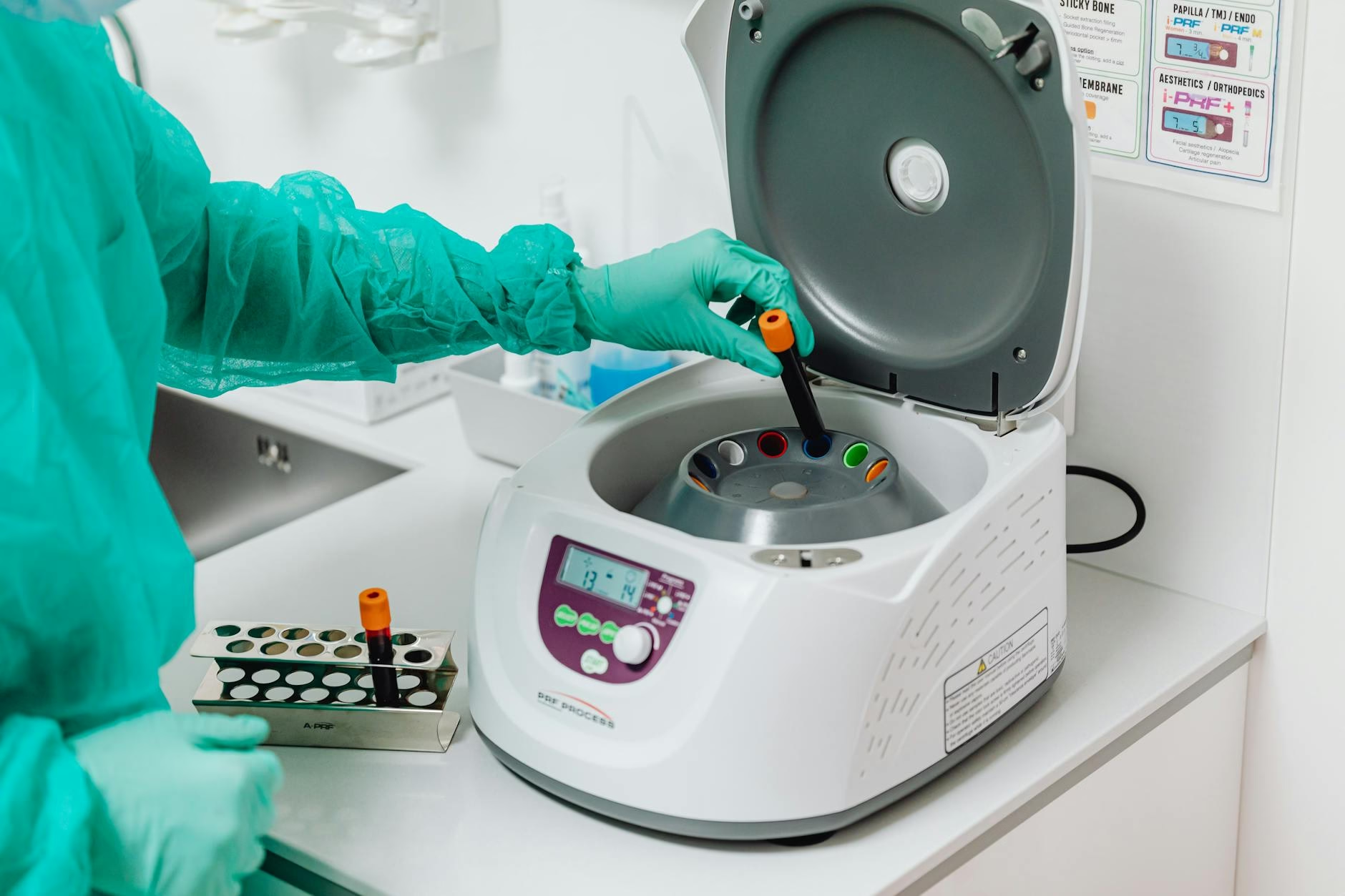
- Centrifugation — The blood is spun in a medical centrifuge for 8–10 minutes, separating the plasma (rich in platelets and growth factors) from red blood cells.
- Topical numbing — A numbing cream is applied to your face for 20–30 minutes so you barely feel the next step.
- Application (microneedling or injection) — The PRP is either applied over the skin during microneedling (so it penetrates the micro-channels) or injected directly into scar sites. Melia typically uses PRP-enhanced microneedling for maximum coverage.
- Post-treatment care — Redness and mild swelling are normal for 24–48 hours. Sunscreen is non-negotiable. No active skincare ingredients (retinol, acids) for 72 hours.
PRP Treatment for Acne Scars: What Results Look Like and When
Most patients see an initial glow and improved skin texture within 2 weeks of their first session. Real collagen remodeling — the deeper scar improvement — becomes visible around weeks 4–8, peaking at 3 months post-treatment.
A standard protocol for moderate acne scarring runs 3–4 sessions spaced 4 weeks apart. Maintenance sessions every 6–12 months keep results long-term. For deeper or more established scars, some patients extend to 6 sessions with combination treatments.
Honestly? The patients who see the most dramatic results are those who commit to the full protocol — not just one session and hope for the best. Skin remodeling takes time, and PRP is not a one-shot fix. It’s a process that rewards patience.
How Much Does PRP Acne Treatment Cost in the Philippines?
Let’s talk about cost — because it’s the first thing most people search for, and it shouldn’t be a guessing game.
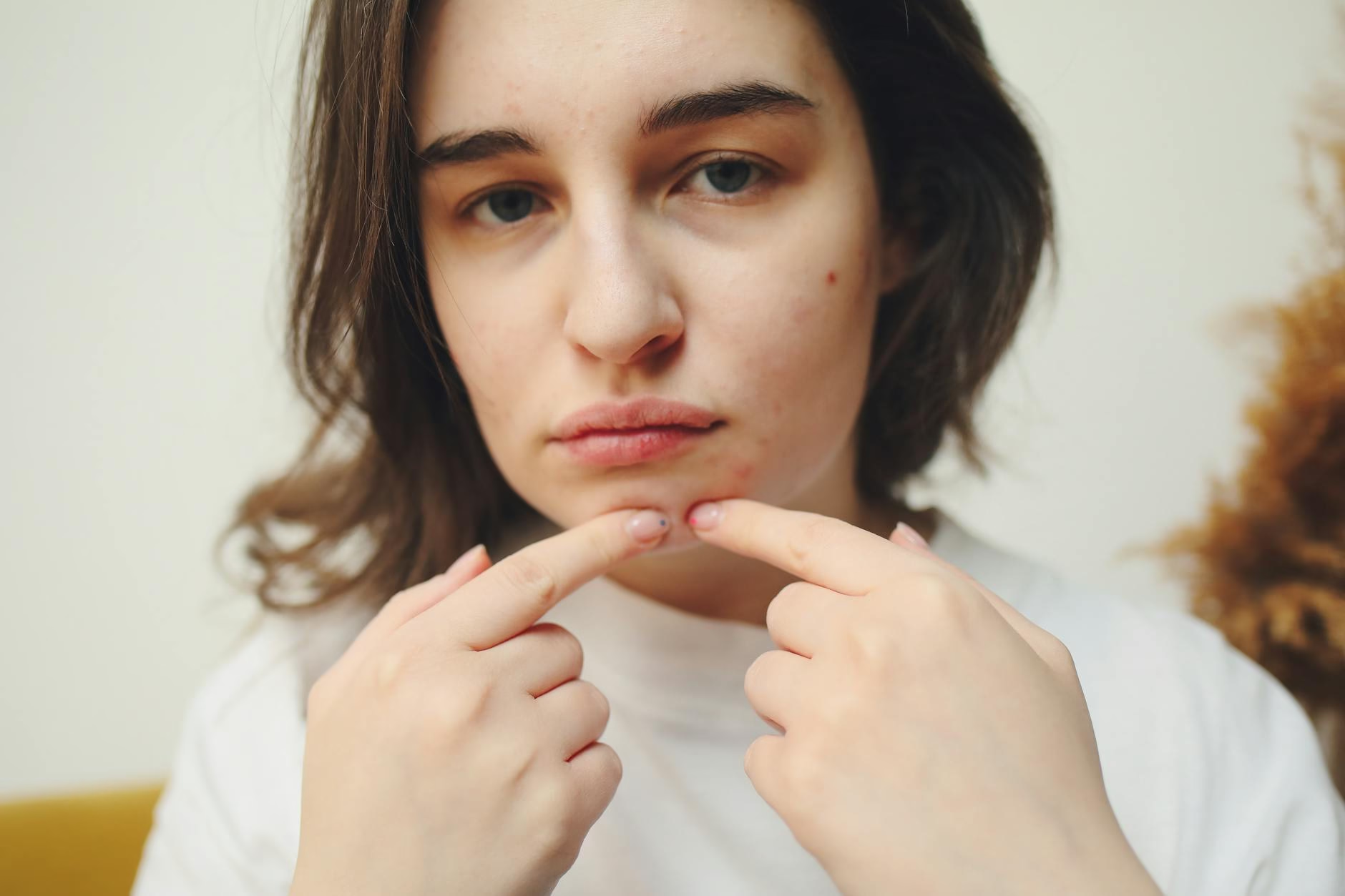
In the Philippines, PRP treatment for acne scars typically starts at ₱3,500 to ₱8,000 per session depending on the clinic, the scope of treatment (face only vs. face + neck), and whether PRP is combined with microneedling or used as a standalone injection. Metropolitan Manila clinics — including those in Pasig City — generally fall in the ₱4,500 to ₱7,000 range per session for PRP-enhanced microneedling.
At Melia Aesthetics, pricing is transparent and session-based. Contact us directly or check our current packages for the latest rates and bundled session promos.
Is PRP Worth the Investment? A Realistic Cost Breakdown
Here’s the framing most people miss: compare PRP to what you’ve already spent on skincare that didn’t work. If you’ve used 3–4 whitening serums at ₱800–₱2,000 each, a chemical peel or two, and maybe a laser session — you’re already past ₱10,000 with partial results at best.
A full 4-session PRP protocol, by contrast, runs ₱16,000–₱28,000 total — and it addresses the structural cause of your scars, not just the surface. Over 12 months, that breaks down to roughly ₱1,300–₱2,300 per month for skin that genuinely looks and feels different.
- Average topical skincare spend per year (for scar-focused routines): ₱12,000–₱24,000 — with limited efficacy on moderate-to-severe scarring
- PRP 4-session protocol: ₱16,000–₱28,000 — with documented collagen regeneration and 12+ months of lasting improvement
- Laser treatment (multiple sessions): ₱20,000–₱40,000+ for comparable scar types
The most common pricing objection? “I’ll just try the creams first.” Valid — for mild surface spots. But for true atrophic scarring with tissue loss, topical products don’t reach the dermis. That’s not a brand preference. That’s anatomy.
Book a free skin assessment at Melia and get a personalized quote based on your scar type and skin goals. No pressure — just a clear plan.
Why Patients in Pasig City Choose Melia Aesthetics for PRP
There are no shortage of skin clinics in Metro Manila. So here’s what sets Melia apart — specifically for PRP treatment for acne scars.
Melia Aesthetics has been operating in Pasig City since 2019, serving clients across the Ortigas corridor and nearby areas including Mandaluyong, Marikina, and San Juan. Every PRP procedure is performed by licensed medical professionals using closed-system centrifuge equipment — meaning your blood never comes into contact with open air, minimizing contamination risk.
The clinic follows a dermatologist-supervised protocol for every acne scar patient — starting with a skin analysis that classifies your scar type before any treatment begins. This matters because not all acne scars respond the same way to PRP. Ice-pick scars, for example, often need a combination approach — which Melia maps out clearly before you spend a peso.
After three sessions of PRP with microneedling at Melia, my rolling scars on my cheeks were noticeably smoother. I used to avoid bright lighting — now I don’t think twice. The team was thorough and never rushed me.
Patient testimonial, Melia Aesthetics Pasig — name withheld per privacy preference
For those wanting to see real outcomes before committing, browse our patient gallery — real before-and-after results from actual Melia clients. And if you want the full context on whether PRP is right for your specific scar situation, our in-depth PRP explainer for pimple scar treatment goes deeper on candidacy and clinical evidence.
Slots for new PRP patients in Pasig are limited each week — the procedure is time-intensive and requires same-day blood processing. If you’ve been thinking about it, this month is a good time to start.
PRP Treatment for Acne Scars vs. Other Popular Options
How does PRP stack up against other treatments you’re probably also considering? Here’s an honest, side-by-side comparison — no hype, no cherry-picking.
- PRP vs. Pico Laser: Pico laser excels at breaking up pigmentation and dark spots but has less impact on deep atrophic (pitted) scars. PRP excels at rebuilding collagen and texture. Combination of both = the most comprehensive result for mixed scar presentations. See Melia’s Pico Laser options here.
- PRP vs. Chemical Peels: Peels remove the top layer of skin, improving surface texture and mild pigmentation. They don’t reach the dermis. For moderate-to-severe scarring, PRP goes deeper and works longer.
- PRP vs. Microneedling alone: Microneedling creates controlled micro-damage to trigger collagen. PRP amplifies that response by flooding the wound site with growth factors. PRP + microneedling outperforms either treatment alone — a 2019 study in Dermatologic Surgery confirmed significantly greater scar improvement with combined PRP-microneedling vs. microneedling alone.
- PRP vs. Dermal Fillers: Fillers physically fill depressed scars (great for boxcar or rolling). PRP regenerates tissue over time. Different mechanisms — sometimes used together for the best of both.
For a full comparison of PRP and laser specifically, check out our detailed breakdown: Microneedling with PRP vs. Laser for Acne Scars.
Visit Our Branches
Melia Aesthetics — Pasig City
Location: Pasig City, Metro Manila
Serving clients from Ortigas, Mandaluyong, Marikina, San Juan, and surrounding areas.
Book a consultation: Visit our homepage or call us directly to schedule your PRP skin assessment.
Frequently Asked Questions About PRP Treatment for Acne Scars
How many PRP sessions do I need to see results on acne scars?
Most patients with moderate acne scarring need 3–4 sessions spaced 4 weeks apart to see significant improvement. Mild pimple spots may respond in 2 sessions; deeper or older scars may require up to 6. Your dermatologist will recommend a protocol based on your scar classification — atrophic, PIH, or a mix — during your initial assessment.
Masakit ba ang PRP treatment? Is the procedure painful?
Numbing cream is applied 20–30 minutes before the procedure, so most patients rate discomfort at 2–3 out of 10. The blood draw feels like a standard blood test. Microneedling with PRP creates a mild prickling sensation in areas without full numbing coverage. Post-treatment, expect redness and mild sensitivity for 24–48 hours — not pain.
Is PRP treatment safe for Filipino or darker skin tones?
Yes — PRP is one of the safest treatments for Fitzpatrick skin types IV–VI, which includes most Filipino skin tones. Unlike laser treatments that carry a risk of post-inflammatory hyperpigmentation on darker skin, PRP uses your own biology and carries no thermal risk. It’s specifically well-suited for brown and morena skin with acne scarring.
How much does PRP acne treatment cost in the Philippines?
PRP treatment for acne scars in the Philippines starts at approximately ₱3,500–₱8,000 per session, depending on the clinic, location, and whether it’s combined with microneedling. In Pasig City and the broader Metro Manila area, PRP-enhanced microneedling typically falls between ₱4,500 and ₱7,000 per session. Full protocols (3–4 sessions) range from ₱16,000 to ₱28,000.
Can PRP completely remove acne scars, or just improve them?
Honest answer: PRP significantly reduces the appearance of acne scars — particularly rolling and shallow atrophic scars — but “complete removal” depends on scar depth, age, and skin type. Clinical studies report 50–75% improvement in scar grade after a full PRP protocol. Deep ice-pick scars often require combination treatments (PRP + filler or PRP + subcision) for maximum correction.
How long do PRP results last for pimple spots?
Results from PRP treatment for acne scars are long-lasting because they’re based on collagen your body produces — not a filler that dissolves. Most patients maintain their results for 12–24 months before considering a maintenance session. Sun protection and a consistent skincare routine significantly extend longevity. Maintenance sessions every 6–12 months are recommended for sustained skin quality.
Take the Next Step Toward Clearer Skin
Remember where we started — staring at those pimple spots, wondering if anything would actually make a difference at the level where the damage really is. That frustration is valid. And it has an answer.
PRP treatment for acne scars works because it stops treating the symptom (the spot) and starts rebuilding the tissue beneath it. It’s your own biology, amplified and redirected to where your skin needs it most.
Melia Aesthetics in Pasig City offers free skin assessments for new patients considering PRP. Walk in, have your scars properly classified, and get a clear treatment plan with transparent pricing — before you commit to anything. For a deeper look at what to expect from the full journey, read our guide on how long PRP takes for acne scars to work — it covers timelines, realistic expectations, and what to do between sessions.
Your skin has been trying to heal since every one of those breakouts. Give it the right tools. Book your free PRP consultation at Melia today — and let’s start building the skin you’ve been waiting for.